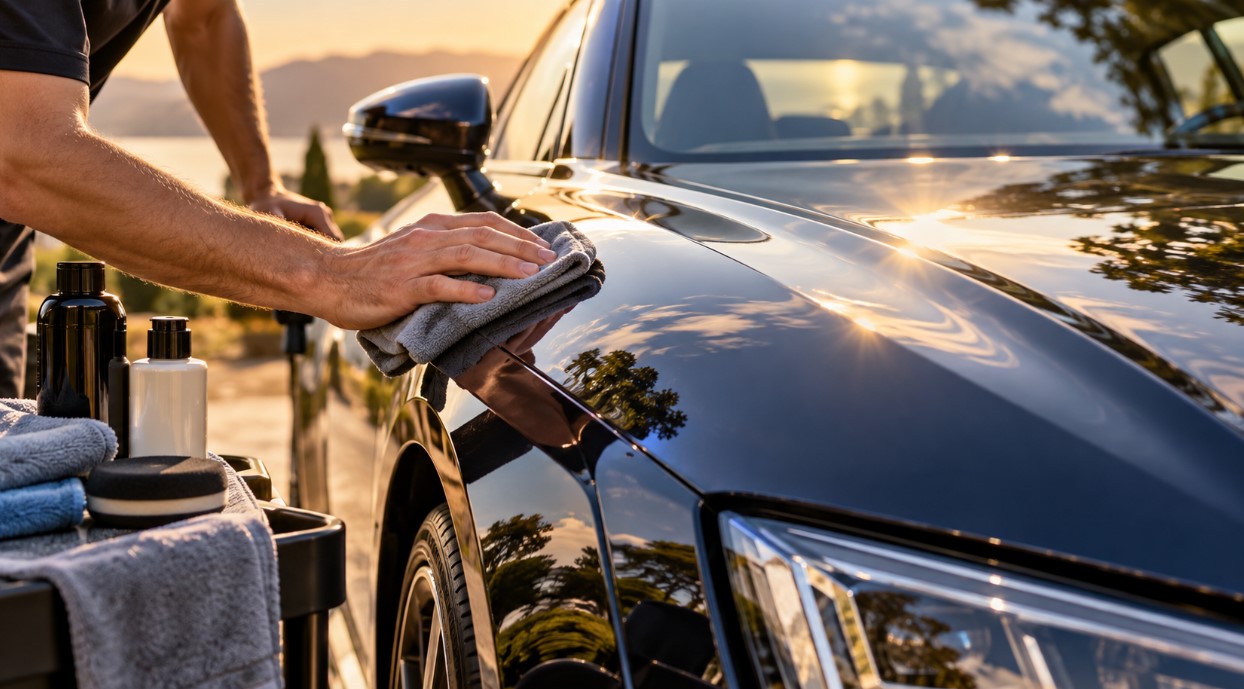
// Polish then protect — the two stages that make paint pop under the sun.
Everything it takes to roll into a show & shine looking its best — how to prep and detail your ride, how the judging works, how to enter, and how to host your own community show.
Independent car-culture guide · not affiliated with any event, organization or person.
Wash, polish and protect — the full detailing order, plus a readiness score.
Classes, criteria and the People’s Choice vote, demystified.
Registration, etiquette and exactly what to pack.
A practical blueprint for running a community show & shine.
A show & shine is the friendliest corner of car culture : owners park their cleaned-up pride and joy on display, and everyone wanders, admires and talks shop. It’s a celebration, not a competition — and that relaxed spirit is exactly the appeal.
Unlike a formal concours d’elegance, where experts scrutinize every bolt against strict originality standards, a show & shine is casual and community-minded. Classic cars, muscle cars, hot rods, lifted trucks, imports and motorcycles all park side by side. Entry is usually simple and affordable, often just a small fee at the gate, and the vibe is more backyard barbecue than white-glove inspection.
The name says it all : you make your vehicle shine, then you show it. Whether you’re bringing a numbers-matching restoration or a daily driver you love, there’s a spot for you. This guide walks through the whole experience — prepping, entering, show-day and even hosting — so your first (or fiftieth) show goes smoothly.
It helps to know the wider family of car events, because “car show” covers a lot of ground. A cruise or cruise-in is a loose, drop-in gathering, often an evening in a parking lot with no formal judging. A show & shine is the organized daytime version : registered cars, set classes, a few awards. A concours sits at the serious end, where originality and restoration quality are judged to the millimetre. Most enthusiasts cut their teeth at cruise-ins and show & shines — they’re welcoming, low-pressure and the best place to learn the ropes and meet people who share the bug.
A great show car isn’t about how expensive it is — it’s about how clean and cared-for it looks. Detailing is done in a specific order, each stage building on the last. Skip a step and it shows under the sun.
Each stage sets up the next, which is why skipping around backfires. You wash first so you’re not grinding dirt into the paint when you clay ; you clay before you polish so the pad glides on a clean surface ; you polish before you protect so the wax seals in a corrected finish rather than locking swirls underneath. Do them out of order and you either undo your work or seal in the flaws. If you only have time for part of it, a careful wash, a spray wax and clean wheels still presents far better than a rushed half-job across everything.
A couple of ground rules make the whole process safer for your paint : always work on a cool panel in the shade (direct sun bakes product on and causes streaks), and use clean microfibre towels, not the old rag from the garage. The vast majority of fine scratches on a show car come from careless wiping, not from the road.
Run through the scorecard below to see how show-ready you are right now — and what to tackle next.
Tick what’s done → get your readiness score.
Great detailing can’t be crammed into the morning of the show. Tell the planner how many days you have, and it maps out what to do when — so you arrive relaxed, not frantic.
Days until show → a day-by-day plan.
Most show & shines keep judging refreshingly simple. Cars are grouped into classes, and winners are picked either by a few volunteer judges or by a public People’s Choice vote. Knowing how it works helps you present your car at its best.
Vehicles are sorted so like competes with like — by era, type or make. Typical classes you’ll see :
| Class | Usually means |
|---|---|
| Pre-war / Antique | The oldest vehicles, often pre-1940s |
| Classic / Vintage | Mid-century classics, stock or restored |
| Muscle | High-performance classics, often 1960s–70s |
| Hot rod / Custom | Heavily modified and custom-built |
| Truck | Pickups and work trucks, stock or lifted |
| Import / Tuner | Modified imports and modern performance |
| Motorcycle | Bikes of all kinds |
Presentation is the part most people leave on the table. Judges and the public form an impression in seconds, so stack the deck : open the hood (and the trunk, if it’s clean) to invite a look, angle the wheels slightly outward to show off the faces, and lay out a simple info card — year, make, model, a line on the build or history. Little touches like a clean engine bay, a tidy boot and spotless door jambs quietly signal that the whole car is cared for, and that’s exactly the impression that wins a class. None of it costs money : it costs attention.
You can’t out-spend a show, but you can out-clean one.
Entering is usually easy : register online ahead of time or pay a small entry at the gate on the day. Arrive early — entrants are often asked to be parked and set up before the public arrives — and follow the marshals to your spot.
If it’s your first time, relax — nobody expects a trailer queen. Show & shine crowds are famously friendly, and the quickest way to enjoy the day is to treat your display as an open invitation to talk. Prop a little card on the windshield with your car’s details so people can read it even when you’ve wandered off for a coffee, and don’t sweat the awards : most entrants come for the company and the stories as much as the trophies. If there’s a People’s Choice ballot, a clean presentation and a friendly chat do more for your chances than any single modification.
Then there’s the kit. A well-packed entrant is a comfortable one — let the builder sort your list.
Your plan → what to pack.
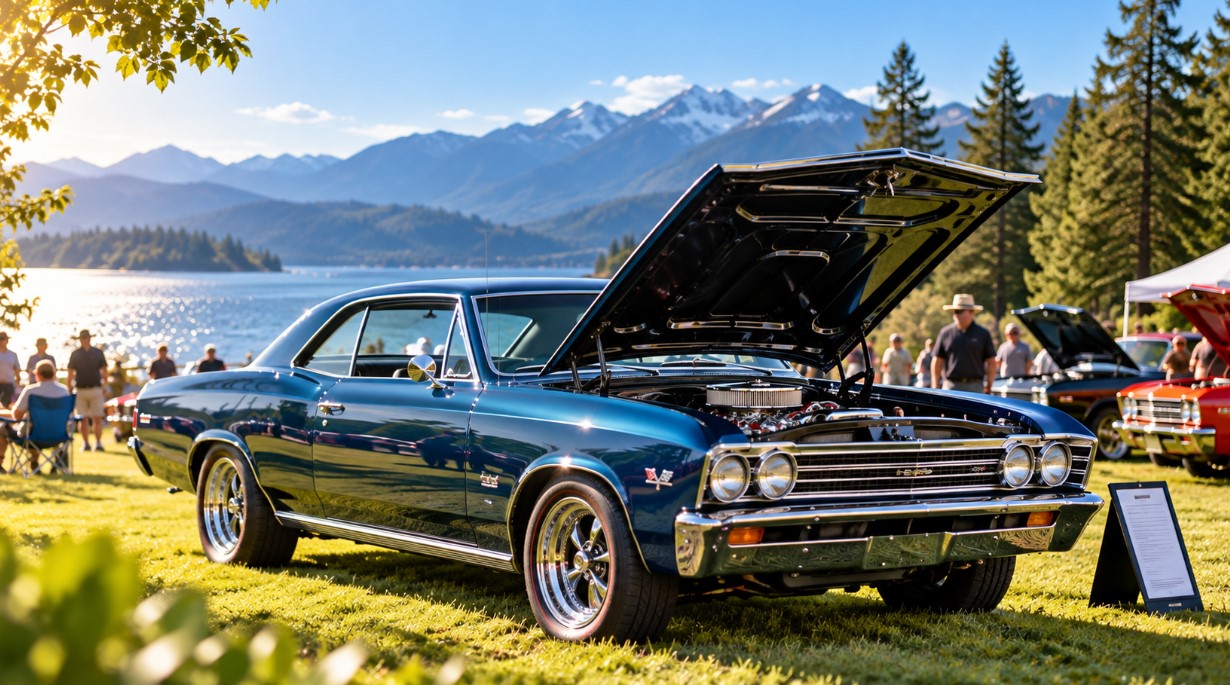
Been to enough shows that you want to run one? A community show & shine is one of the most rewarding events to organize — and very doable with a plan. Here’s the blueprint.
Start smaller than your ambitions. A first-year show of fifty or sixty cars that runs smoothly builds the reputation that fills the field next year ; an over-reached event that descends into a parking jam does the opposite. Nail the fundamentals — easy entry, sensible parking, shade, washrooms, something to eat and a clear awards time — and word of mouth does the marketing for your second edition.
Great shows run on parking flow and clear signage. Map where each class parks before the gates open, brief your marshals, and the rest of the day takes care of itself.
British Columbia has one of the liveliest car-show calendars in the country, and the Fraser Valley — from Surrey and Langley out through Abbotsford and Chilliwack — is right in the thick of it. Long, dry summers and a deep community of car clubs make for a packed season.
The region’s mild, dry summers are a big part of why the scene thrives : long daylight, little rain through July and August, and plenty of open venues mean organizers can plan with confidence and owners can keep their paint pristine on the drive in. If you’re new to the area or just getting into the hobby, the easiest first step is simply to show up to a local event as a spectator, see what you like, and start chatting — the valley’s car community is welcoming, and most people are only too happy to point you toward the next show, a good detailer, or a club worth joining.
Wherever you are in the valley, there’s almost certainly a show within a short drive on a summer Saturday — and the welcome is part of the point.
A show finish isn’t a one-weekend job : protecting it between shows means far less work each time out.
Look after the shine, and the shine looks after you.
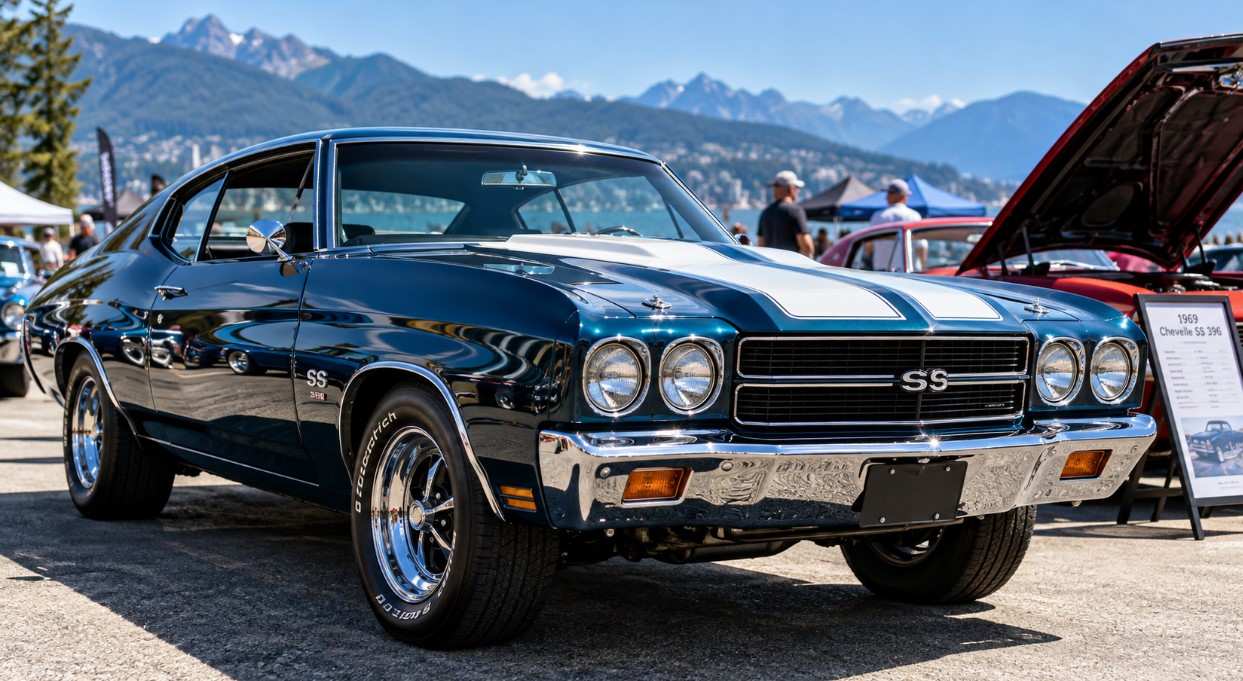
A show & shine might hand out trophies for Best in Show, invite spectators to vote for People's...
The cars are parked, the hoods are up, and the crowd is wandering between rows of polished chrome...
A 1968 Camaro, a restored farm truck, a modified Subaru and a spotless new Corvette all deserve a...
Score your car, plan your prep, pack your kit — and claim your spot in the lineup this weekend.
Check if my car is show-ready